The Roguelike Experience
Written on
By SadPumpkin
time for another article to yap about games! This time it is about genre that is probably saturated in this day and age: roguelikes. It feels like every day there is one new 'roguelike' game being produced, so much so that 'roguelike' does not sound like a real word and can mean basically anything.
despite that there is an over-saturation of 'roguelikes', it is one of my favourite genre. So, i like to take the time to talk about it, from the past to present, and write about why it is such an appealing genre to me.
What Is A Roguelike
to begin the yap, we first have to establish what even is a 'roguelike'. For this yap, i will describe what i understood by going back to the original label.
Back To The Beginning
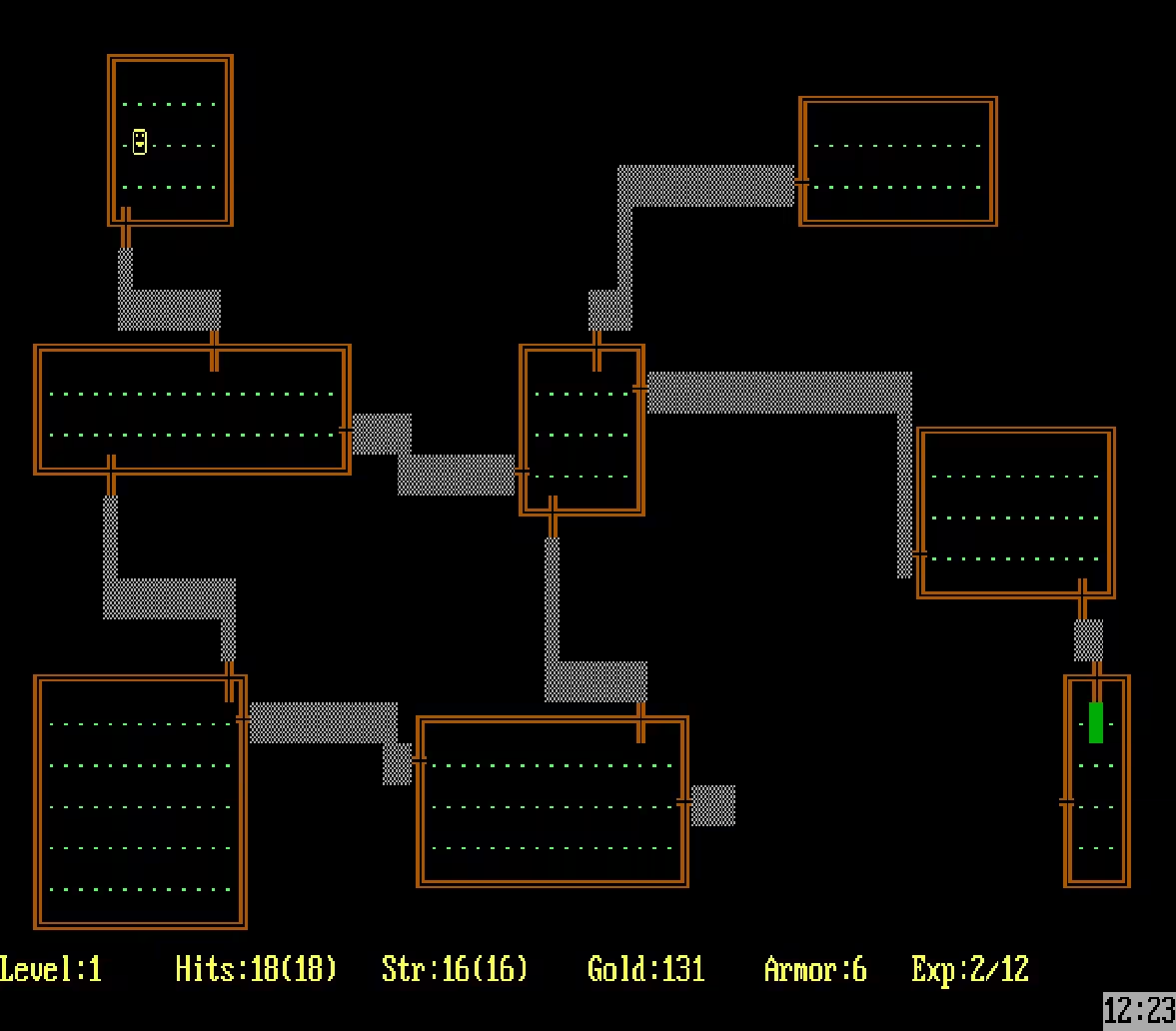
in the early days, there exists a game named Rogue. It's a simple ASCII grid-based dungeon crawler, where the goal is to go through the levels of the Dungeons of Doom, retrieve the amulet of Yendor, and make it back out alive. Each level is procedurally generated with loots and enemies. You have to navigate the dungeon, identifying the random loots, equip yourself and fight enemies to get stronger, and try not to die while doing so. Dying is permanent and you will need to start all over from the beginning of the dungeon. Due to its procedural generation and randomness, each run is effectively unique.
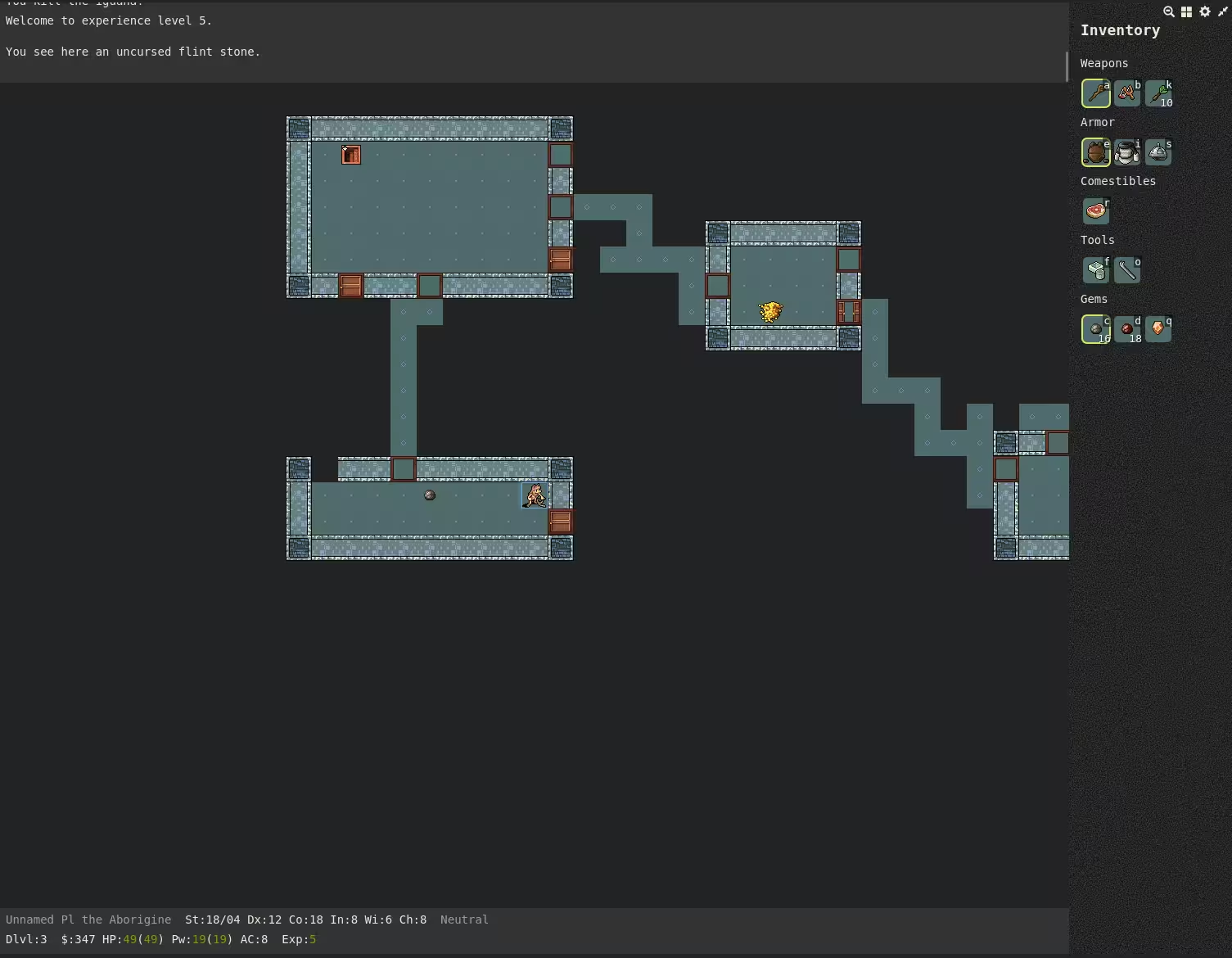
the games that are inspired by Rogue are known as 'roguelikes', similar to how FPS back then are known as 'doomlike'. The (in)famous one is NetHack. It took the mechanics of Rogue and amp it up to eleven. First, it introduces branching paths and different areas with unique generation algorithms, or setpieces that are static. It also adds extra interactions and systems, seemingly random mechanics that kills you, starting classes, and more enemies variety. It greatly extends the length and variation of a run.
some calls these games the true 'roguelikes'. For the purpose of this article, i will call it 'classic roguelike'. It is a genre with these specific characteristics:
- Grid-based and turn-based movement system.
- Perma-death with no meta progression.
- There can be starting kits (race/class/abilities).
- Some sort of player progression system like a levelling system. Some may focus on looting equipments and items to get stronger.
- Procedural generation of the levels, which includes layout, loot, and enemies. Some can include prefix patterns and/or static pattern, but the random generation should be the primary focus.
Recollection of the Past
there was a time where i was very much into classic roguelikes. i am pretty sure it was NetHack that got me into the genre. i didn't know what i was doing. i only remember wandering around and dying a lot. Even when i start to understand what is going on, i didn't get very far. It was the randomness, the procedural generation, and the niche interactions that fascinated me. The amount of interactions the game has is astounding, which usually result in a lot of Yet Another Stupid Death (YASD). My last run ended with me dying of food poisoning because i ate a rotten corpse. whoops. i did try out the different variants of NetHack for fun, like FIQHack and UnNetHack. Of course, i have never won a game. The best run had me reaching Gehennom after copious amount of wiki consultation. i gave up on that run because i found it boring at that point. Oh well.
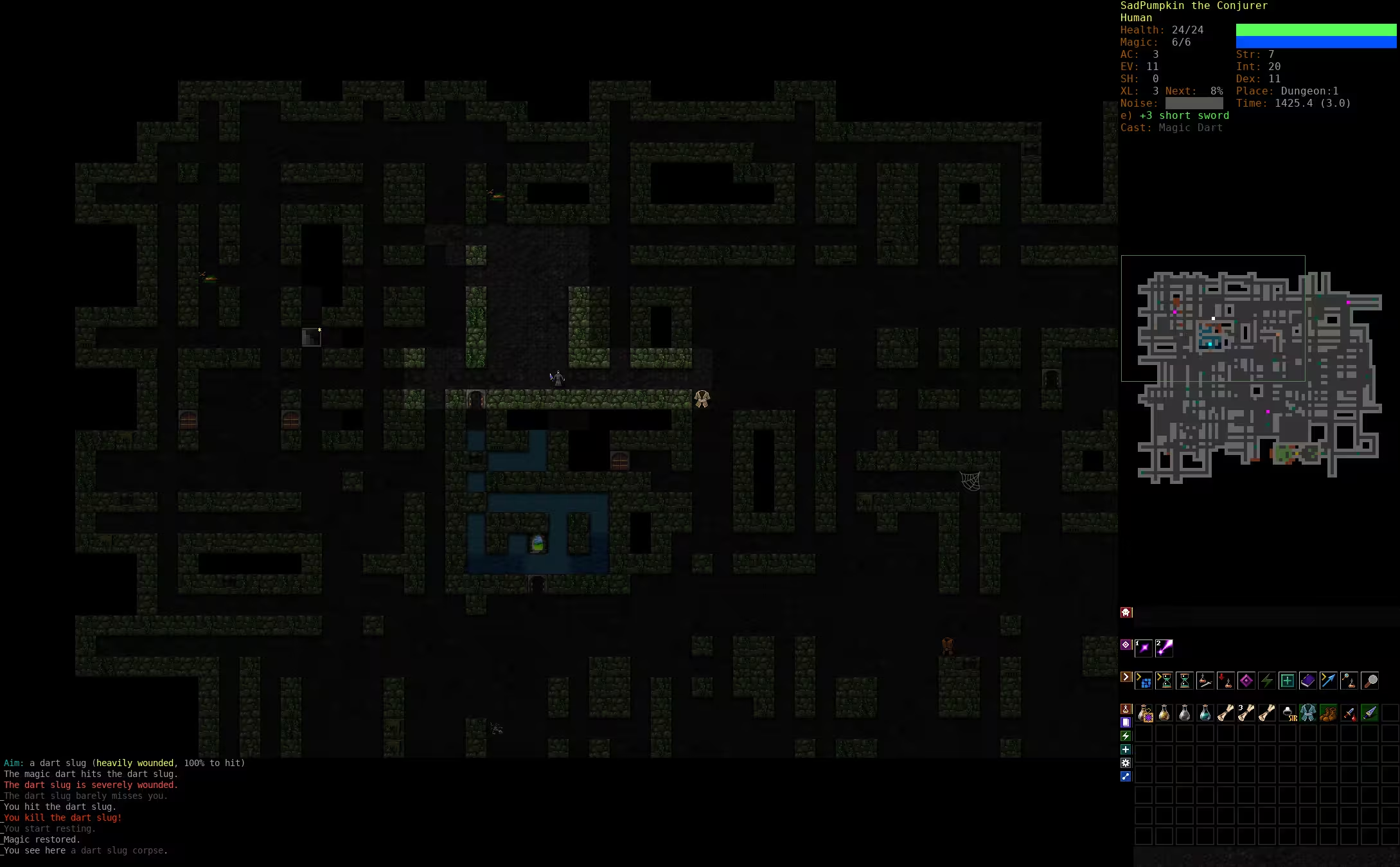
i then got into Dungeon Crawl Stone Soup (DCSS). It has more controlled randomness, such that you are likely to win with good planning. Furthermore, it gives information straight up, reducing the amount of guesswork and wiki consultation required. The game is designed such that grinding is discouraged. There are a number of starting classes and jobs to mix-and-match. It also features a neat skill system, where the Experience Points (XP) earned are distributed to a selected set of skills, toggled by the player. Each skill contributes to a specific aptitude like short blade, conjuration spell, fire spells, stealth, etc. This system allows some strategic character building, where you can double down on a skill, or train up other skills to cover a weakness.
DCSS plays similarly to NetHack in that the goal is to get to the end of the Dungeon and leave it alive with the treasure. The main task is already challenging enough, yet the game offers side routes that challenge even the most seasoned player. Overall, DCSS dials down the fantastical world building and random gotcha, instead heavily focuses on the systems and gameplay. i actually managed a 3-rune win with a Minotaur Berserker (i think it's 0.22, don't remember), which is the game's 'easy' mode. A win is a win, i don't care. Personally, i think it leans too heavily on the mechanical side of things these days, but it is still pretty fun.
there are more classic roguelikes that i played, such as:
- Ancients Domain of Mystery (ADOM) features a full-fledge RPG system with overworld nagivation and a corruption system
- Brogue takes a more refined approach to the formula. i played this as a coffee-break game.
- Pixel Dungeon is a simpler (but not any easier) take on the dungeon crawling on mobile.
there are more classic roguelikes i didn't touch like Cataclysm: Dark Days Ahead (CDDA), Tome of Maj'Eyal, Caves of Qud, Cogmind, etc. Unfortunately, i have grown out of classic roguelike, mostly because i do not have the time investment for these games anymore. These games do demand a certain amount of concentration that i could not afford anymore. Perma-death definitely puts a damper in my mood when playing games these days. The depth of its systems is almost a non-starter, so much so that a wiki is often necessary to even get a grip with the games.
yet, it is this genre that offered the kind of deep experience that is not easily found anywhere else. The de-emphasis of graphics and effects led to more focus on the intricacies and the interactivity of the systems. Learning the rules of the game and exploiting it is part of the fun. i believe this is what allows a player to immerse themselves into the world of roguelikes, as if they coexist with the world and learning about its systems with each run, whether it ends in success or failure. Clearing a run is just the cherry-on-top to demonstrate the player's mastery of the systems, doubly satisfying given the random nature of classic roguelikes.
Modern Era
then, we arrived at the modern day's version of 'roguelike'. Let's be honest, this term has been tossed around so much that it can mean so many things and yet nothing at the same time. Thus, let me begin with the games that i heard and played that uses this term.
the first time i've heard the term 'roguelike' used to describe the gameplay would be Binding of Isaac and Nuclear Throne. To their credit, none of the games described themselves belonging to the 'roguelike' genre, but only metioned having roguelike-like elements. However, they do get touted as roguelikes, so i thought examining their gameplay may shed light on what 'roguelike' meant today.
Binding of Isaac
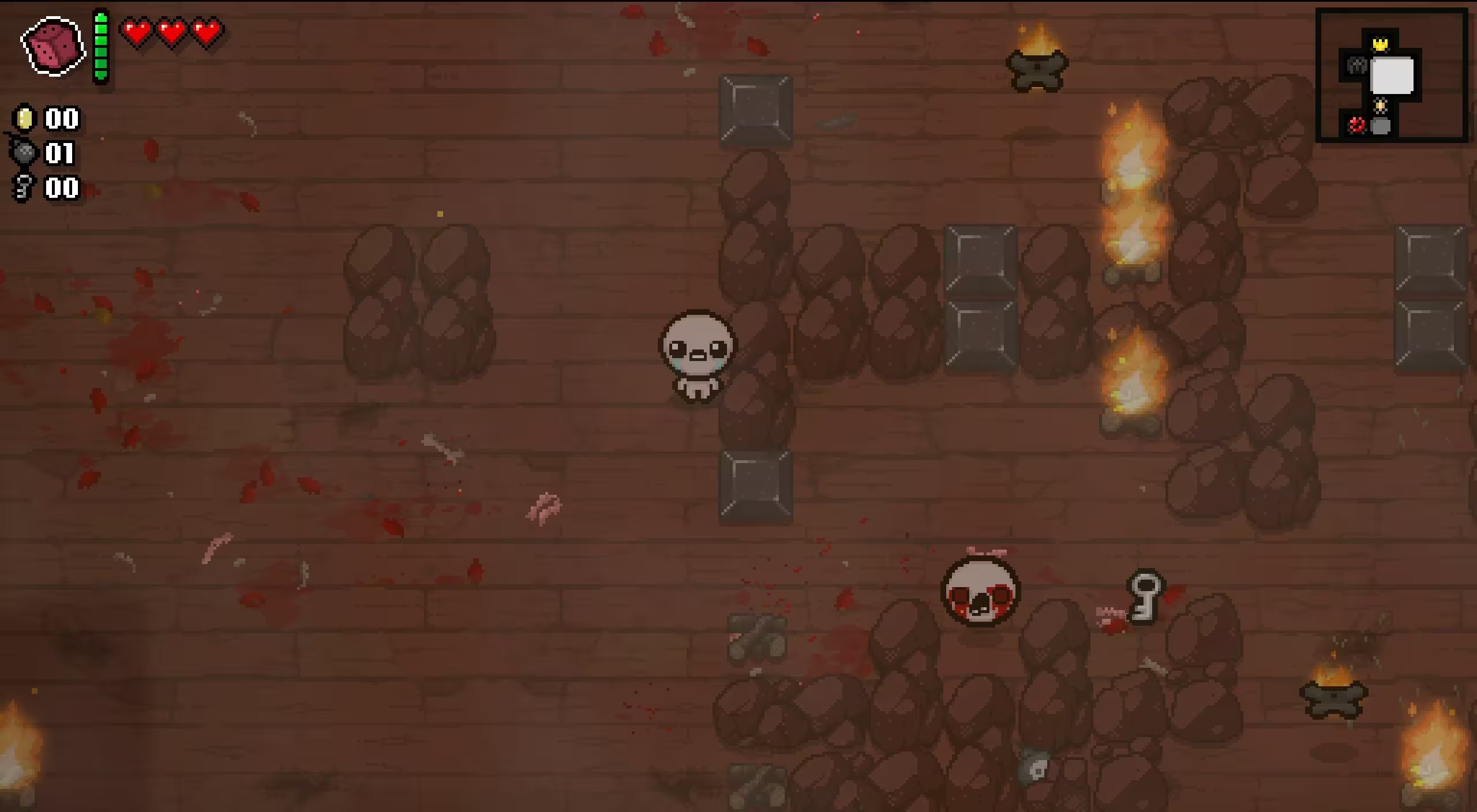
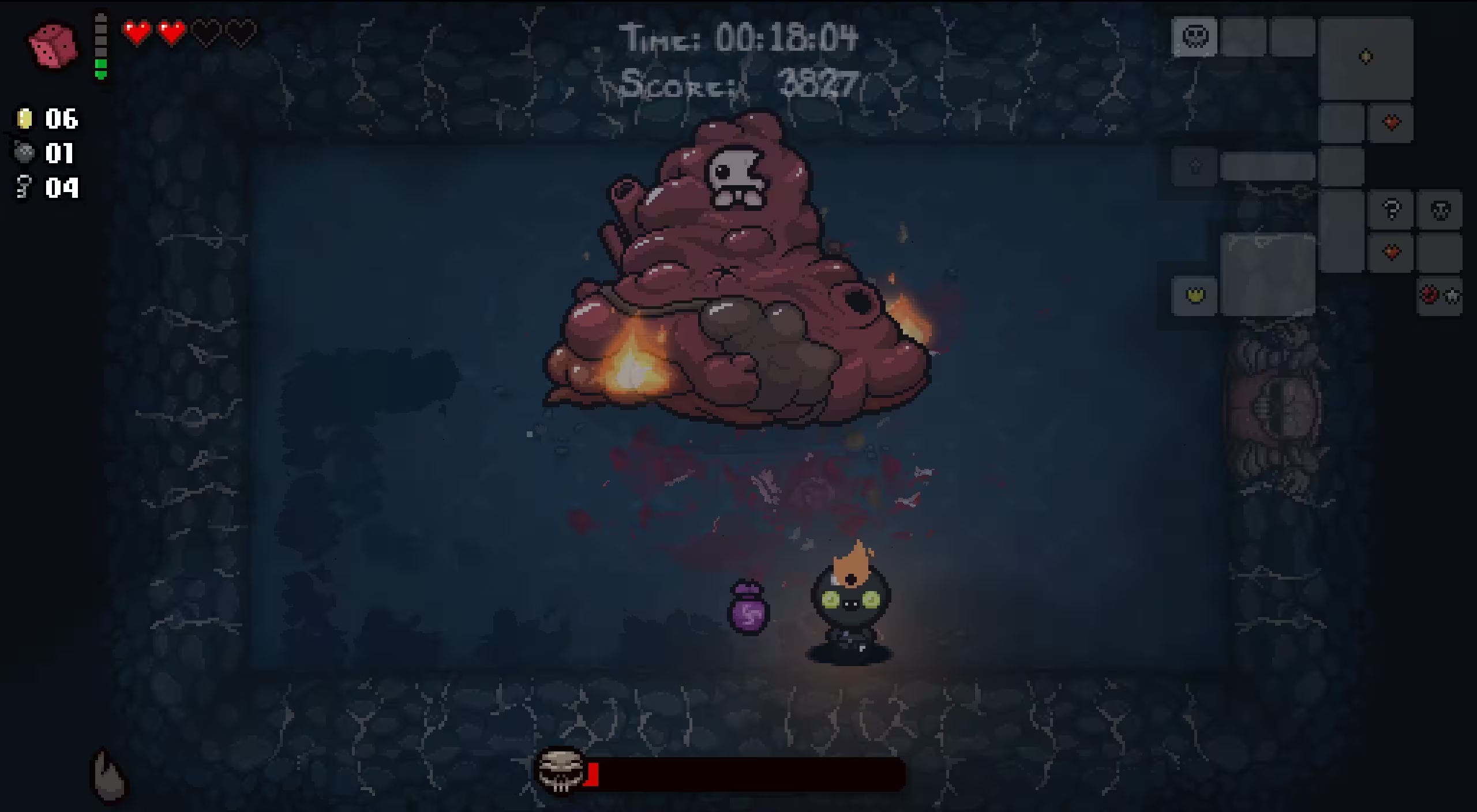
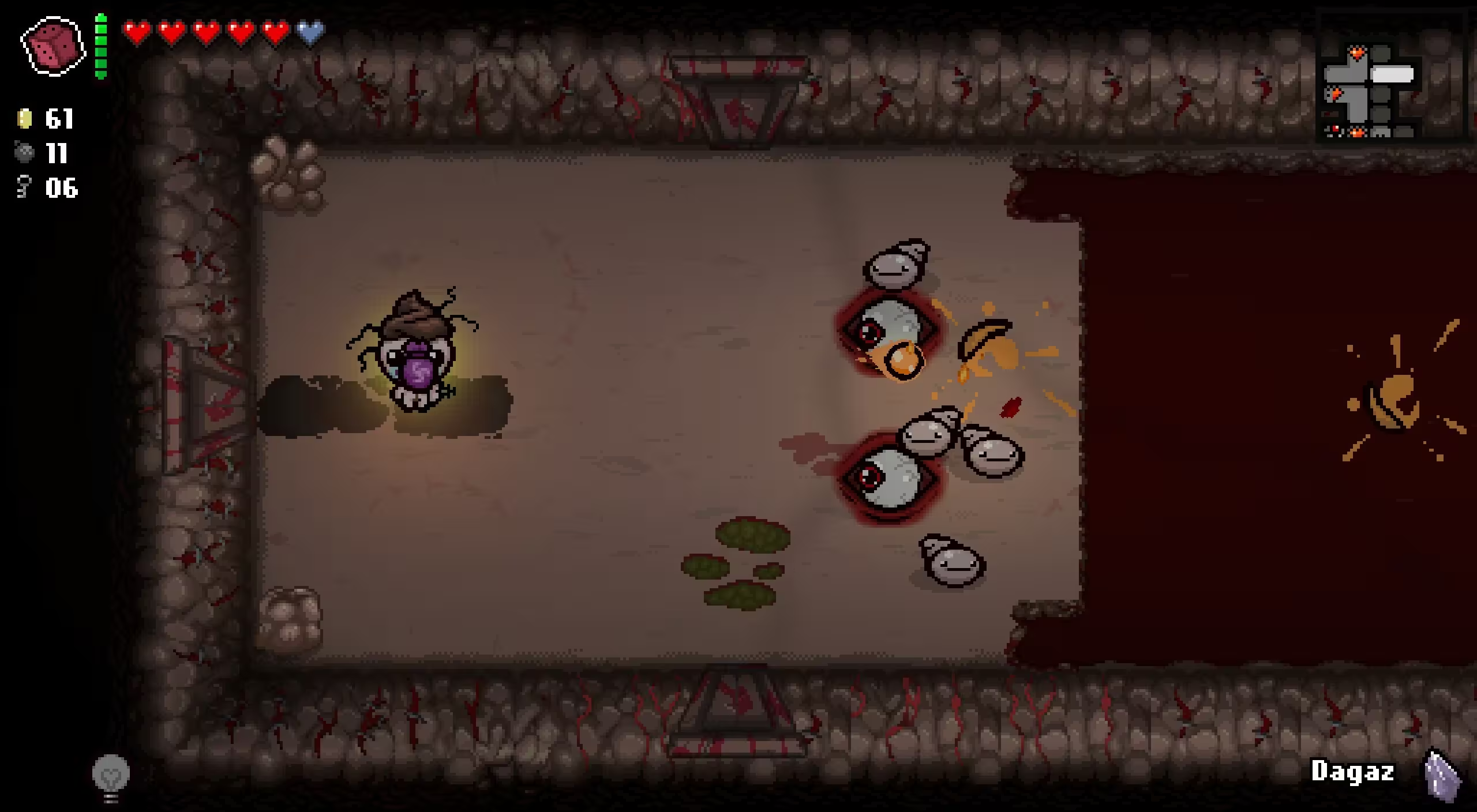
in Binding of Isaac, a level consists of multiple rooms arranged in a grid-like pattern, similar to a classic Legend of Zelda dungeon. In fact, the gameplay resembles the classic Legend of Zelda. Each room are procedurally generated from a template of room patterns with random enemies and loots. There are 'special' rooms which may or may not reward you, e.g. crown room, shop, sacrificial room, devil room, etc. Each level ends with a boss which you need to defeat. You will go through multiple levels, where the settings can changed to offer different hazards and enemies. The hope is that you gathered enough equipments and powerups such that you are powerful enough to take on the final boss (which there are multiple possible final bosses, not to mention optional superbosses). It is likely that the character you end up with will be vastly different from a previous run. Whether a run ends in success or failure, you will always start fresh from the beginning. The game offers multiple characters with different playstyles, plus a somewhat meta-progression system that adds new item into the game's loot pool to be generated in the levels.
It seems that it isn't wrong in its description. It does have quite a bit of 'roguelike' elements to its gameplay. It favours powerup-based progression instead of a traditional levelling system, and it does not have grid-based movement and turn-based combat. It helps that it has elements of a dungeon crawling, owning to its inspiration: The Legend of Zelda. As a side note, the game does feel NetHack-ish with its occasional troll mechanics and room generation.
Nuclear Throne
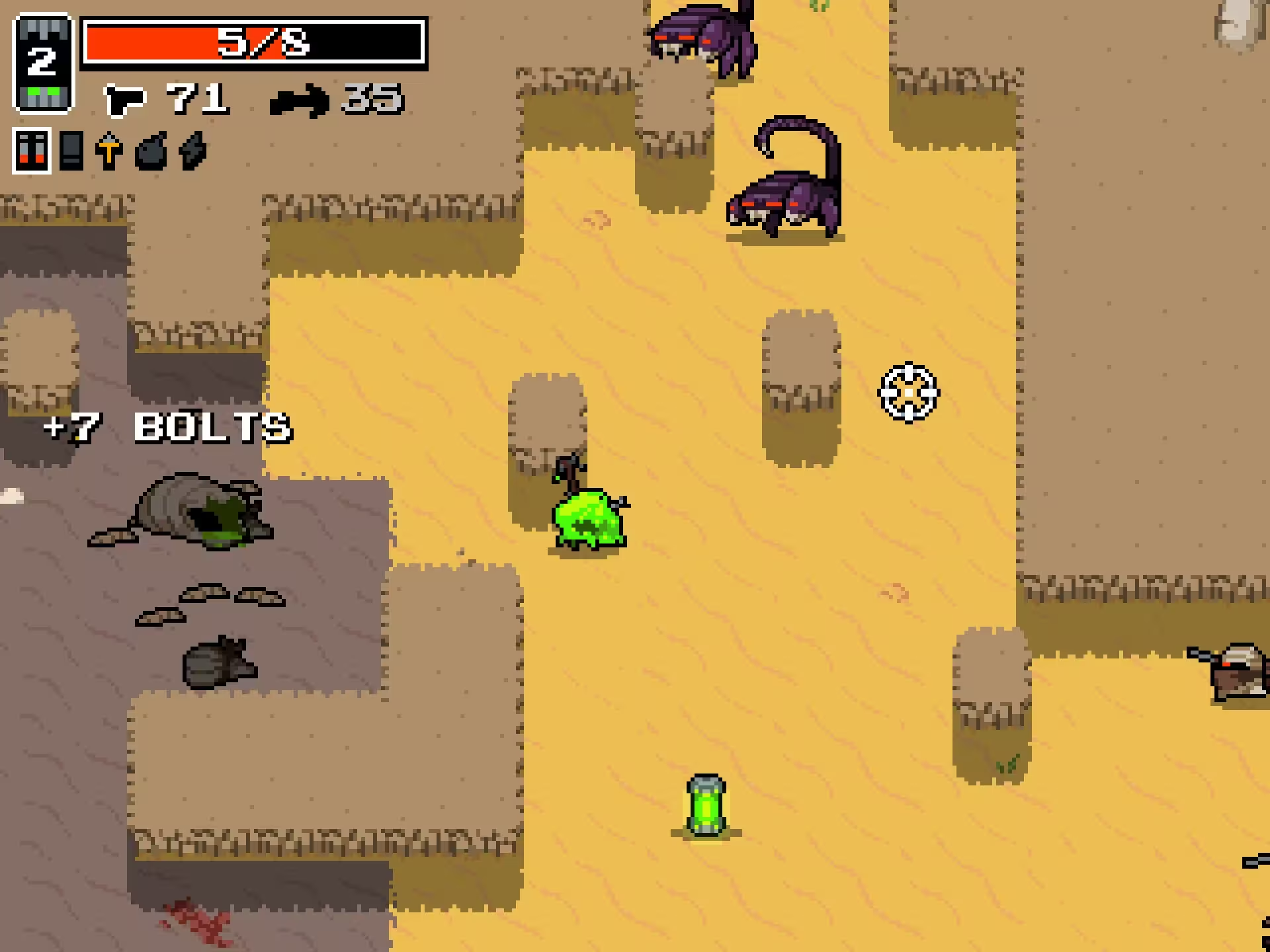
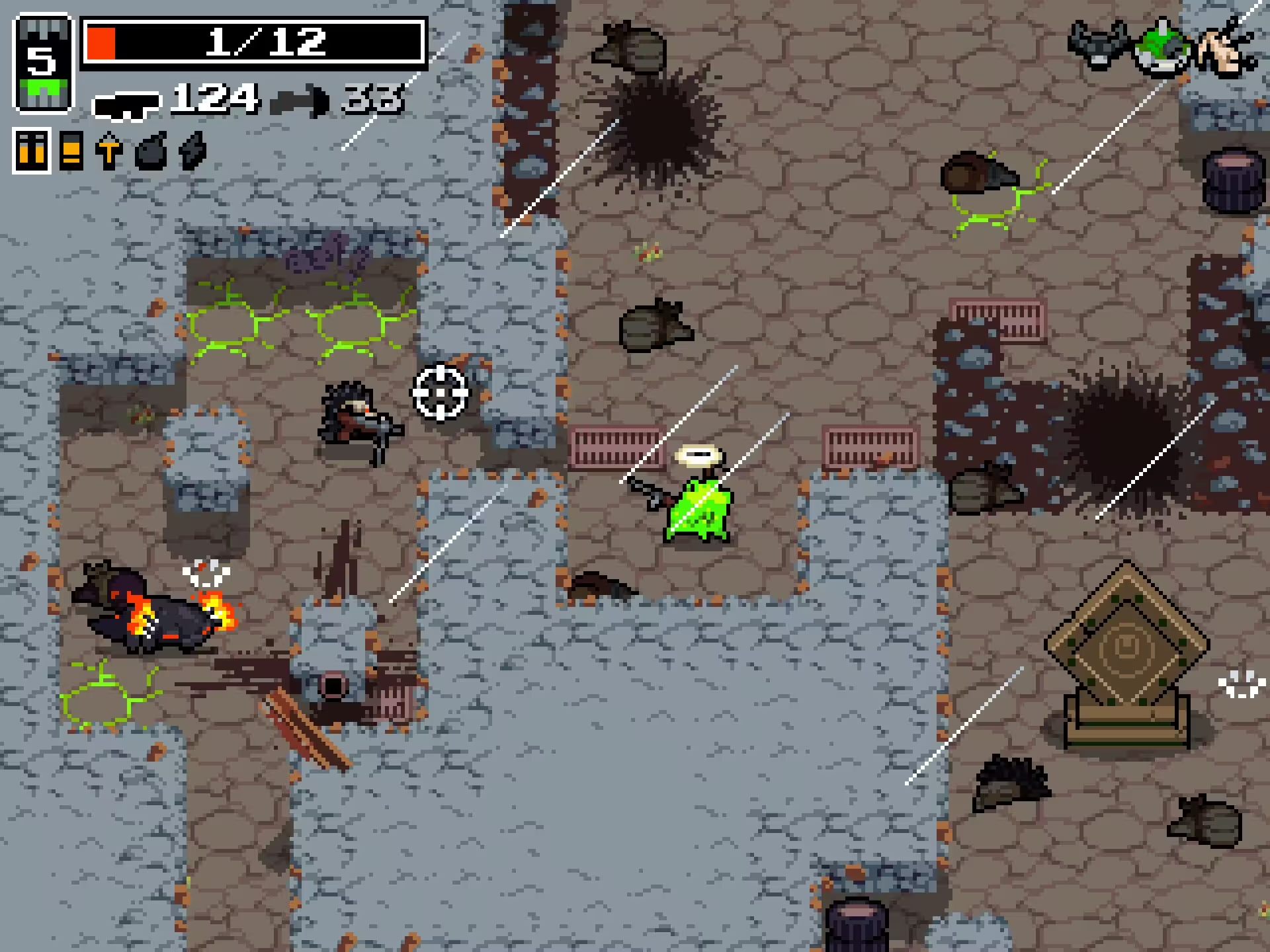
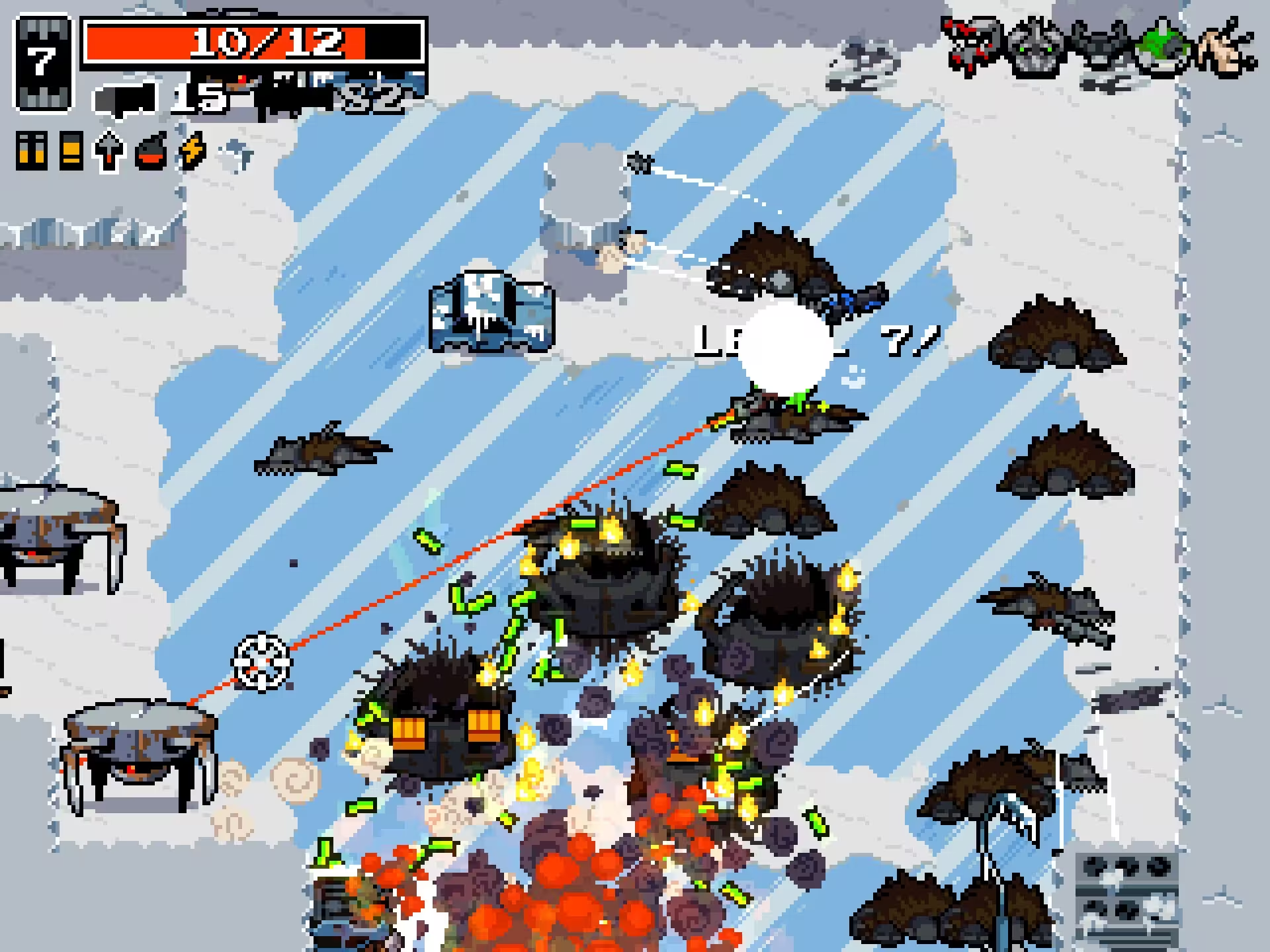
in Nuclear Throne, you pick your starting character which has a passive and an active ability, and off you go to the first level: the desert. Your goal is to reach the fabled Nuclear Throne that is said to fulfill your greatest wish. Each level is procedural generated and requires you to clear all the enemies. Each level contains a weapon chest and an ammo chest. You would need to manage your ammo so that you don't run out at the wrong time. You collect rads (this game's XP) which is dropped when an enemy is killed. Each level also contains a canister of rads. You level up by collecting enough rads. A level-up allows you to pick a perk to help you in your journey to the Nuclear Throne. Throughout the game, you will go through different settings, featuring different enemies, hazards, terrain generation, and bosses. Beating the Nuclear Throne will end the run. As usual, nothing carries over from a previous run. This game also does not offer meta-progression. No new perks or weapons are unlocked over time. The only unlockables are the starting characters, their respective skins, starting weapons, and crowns (which are gameplay modifiers). These are mostly achievement indicators and for bragging rights.
those who played the game would know the Nuclear Throne isn't the only final boss, but i won't say much on that
nuclear Throne is faster-paced/more arcadey compared to its peers, where each run can be done within 30 minutes reliably (15 minutes if you are good). There is less emphasis on looting and weapon build. Plus, its levelling system is simplistic. Thus, there is more focus on the action, i.e. the move-and-shoot aspect. The level generation has similarity to classic roguelikes' cave generation. Of course, no grid-based movement and turn-based action.
this is probably not at all close to a roguelike. Yet, the vibe feels like it. Maybe it's the procedural generation of the level and the strive to clear the level without getting killed yourself. At any time, the player is 3 or 4 shot to death and that struggle to do whatever it takes to survive probably capture the essence of a roguelike better than anyone of its peer.
i can keep going on and on examining each game that describes itself with the term 'roguelike' or having 'roguelike' elements, e.g. Risk of Rain series, Dead Estate, Spelunky, Hades, Roboquest, Voidigo, Enter the Gungeon, etc. However, i think i got a good grasp on what 'roguelike' meant today. When 'roguelike' is used to describe a game, it usually meant:
- There is a set of levels that you would need to navigate through, where each level have some elements of procedural generation or randomness, such that each game run is sufficiently different from each other.
- Perma-death is present but less punishing. Whatever you gathered during a run is not preserved over to the next but there are notion of unlockables and upgrades that serves as meta-progression.
- There seems to be greater emphasis in the looting and equipements synergies/builds, where the chaos that comes from combining the items is the attraction
Compared to classic roguelikes, modern roguelikes generally ditches the slower and methodical action, streamlines the system interactions, and restrict exploration. In turn, it offers a faster-paced/arcade-y experience and encourages build experimentation. After all, if a run only lasts an hour, why not try picking up that one item just to see what happens. The inclusion of meta-progression serves as a tangible reward to strive for in each run. The reward itself can make the next run more interesting or easier. These aspects are the ones that i find most enjoyable from modern roguelike.
The Common Ancestor: Adaptability and Scrappiness
regardless of past and present, there is one thing that kept me coming back to 'roguelikes': to adapt to the randomness of the game.
due to procedural generation, no two runs are truly the same. A given run can toss you into a random scenario and ask you to deal with it. Sometimes, the game wouldn't give you a specific equipment/upgrades and you would have to make due with what you have. Sometimes, the game will generate a barren terrain with you surrounded by enemies; sometimes, it might give you a sprawling maze with no end in sight.
at any time, no matter how powerful you get, the game may throw a curveball and you simply have to adapt to it. It can create the highest of highs where you managed to survive a scenario against all odds with good planning and on-the-fly improvisation. The experience of it all is the greatest reward when engaging with a 'roguelike'.
something that 'roguelikes' taught me is that there is no honour in survival. It's you against the world. Any advantage, 'cheese', or tactics that let you live to see another day is fair play. You are not just rewarded for raw strength, but also knowing how to be smart, when to engage or retreat, when to use items and what-not. The only misplay is the one that leads you to your death. i believe it's this scrappiness that makes me enjoy roguelike. i mean, it's in the name: Rogue, which is known for their cunningness.
Lamentations
with all that said, i do have some grievance with modern roguelikes.
with how broad of the definition is, it is no wonder that many games refers themselves as a roguelike. As long as a game offers some form of randomisation to encourage replayability, it can easily get labelled as a roguelike. A lot of time a game can be a straight-up arcade game but it gets the 'roguelike' tag because it features randomisation.
there is a term to differentiate it from classic roguelike: roguelite. personally, i don't really like that term, mostly because it still ties back to the original Rogue when there is no resemblance to it, but it is the best term we have. Sometimes, i wish we just drop the term 'roguelike' altogether since it deviates so far from its original meaning. It is what it is, i suppose.
not only that, i noticed that modern roguelikes have settled on a particular formula: go through level, kill enemies, level up and pick from a set of upgrades (usually 3), repeat until you reach the final boss. The experience is so distilled to the point where it misses the essence of 'roguelike': to engage and adapt to the world. It becomes so reductive that you might as well class it as an arcade game at that point, going back to my first point.
another thing i lament is the experience itself. Most games that tag themselves as 'roguelike' generally advertise that 'each run is unique'. Although this is true technically, what i usually find is that the experience feels the same across each run. Even if the game offers multitude of upgrades, often times they don't really change up the experience but more akin to a number in a balance sheet. Such game can easily fall into the trap of being wide as an ocean but shallow as a pond.
this is in contrast with classic roguelike where each run feels different due to the multiple randomising factors (level proc-gen, damage numbers, enemies movement, etc.). The systems in place are usually more complex, in comparison to the simpler 'combine elements A and B to get unique effects' of modern 'roguelike'. Unfortunately , this also elevates the game's difficulty floor, which makes it unapproachable often times.
all the above is more of a personal taste, so take it with a grain of salt.
Looking To The Future
with all that said, i will probably still enjoy 'roguelike', classic or modern, although i do wish the term that has a better label for its modern incarnation. In my opinon, some games really do not need the 'roguelike' label.
still, it is quite fascinating to see developers infusing the randomisation mechanics into different kind of genre. I mean, it did give us the 'survivor'/bullet-heaven genre (e.g. Vampire Survivors). Despite the saturation of the 'roguelike' games, i remain excited to see what people can come up with next.
that's enough yap for one article. See ya next time!
note: all gameplay is by me unless stated otherwise.